Qwen 3.8 27B Can't Match Sonnet's Performance (On Health)
Our latest Medmarks update with recent 20B–40B parameter models shows a strong Gemma 4, uneven Qwen progress, and an impressive first showing from Muse Glimmer.
Read ->Essays, technical deep-dives, release notes, and field notes from Sophont and our research community.
Spatial gene-expression prediction from routine pathology, precision medicine, interpretable biomarkers, and analytical validation.
Read report ->
Our latest Medmarks update with recent 20B–40B parameter models shows a strong Gemma 4, uneven Qwen progress, and an impressive first showing from Muse Glimmer.
Read ->
nanopath is a fast, fair, open challenge for small-scale pathology foundation model recipe search: train a tiny model on one GPU, run a THUNDER/PathoBench/PathoROB-style evaluation in under 15 minutes, and compare submissions on our live tracker.
Read ->
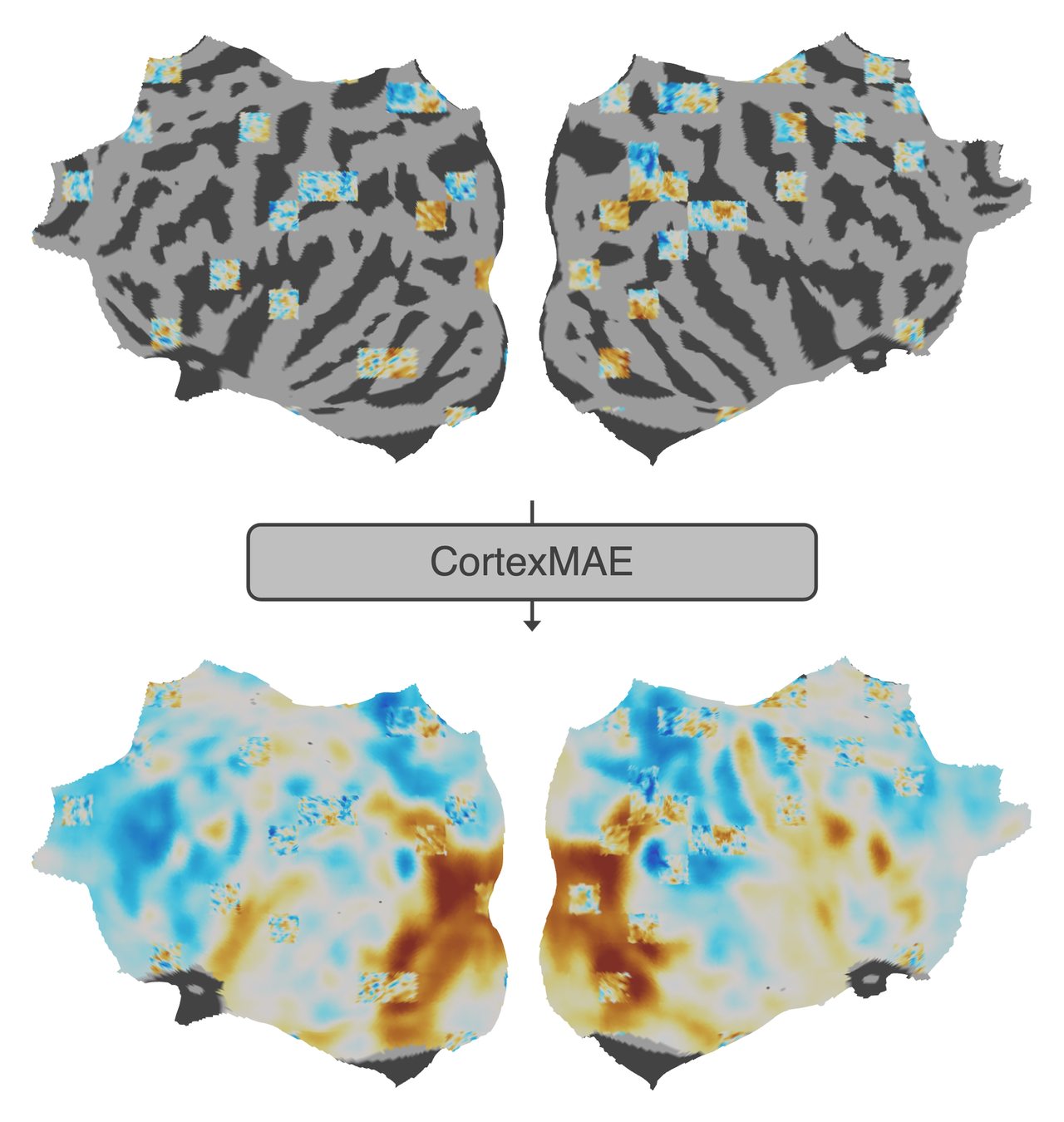
CortexMAE is a family of open fMRI foundation models trained on 2.1K hours of Human Connectome Project data. The release includes 50+ checkpoints alongside Brainmarks, an open, reproducible benchmark suite.
Read ->
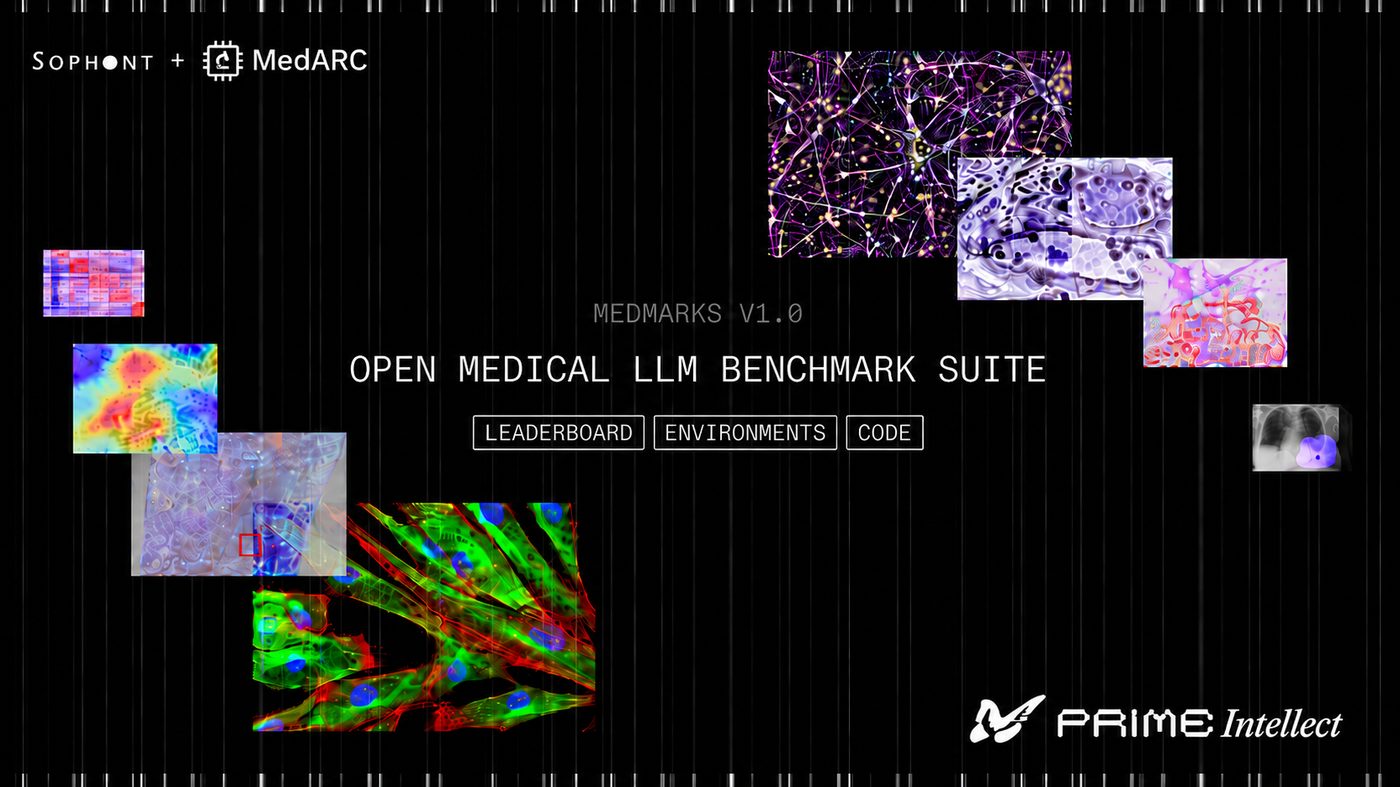
Medmarks v1.0 expands Sophont's open medical LLM evaluation suite to 30 benchmarks and 61 models across 71 configurations, adding agentic workflows, tool-use evaluation, multi-judge open-ended scoring, and reinforcement-learning environments.
Read ->
Medmarks v0.1 introduces an open benchmark suite for verifiable and open-ended medical LLM evaluation. This earlier release is distinct from Medmarks v1.0 and analyzes model accuracy, cost, reasoning behavior, quantization, prompt sensitivity, and why the datasets can double as reinforcement-learning environments.
Read ->
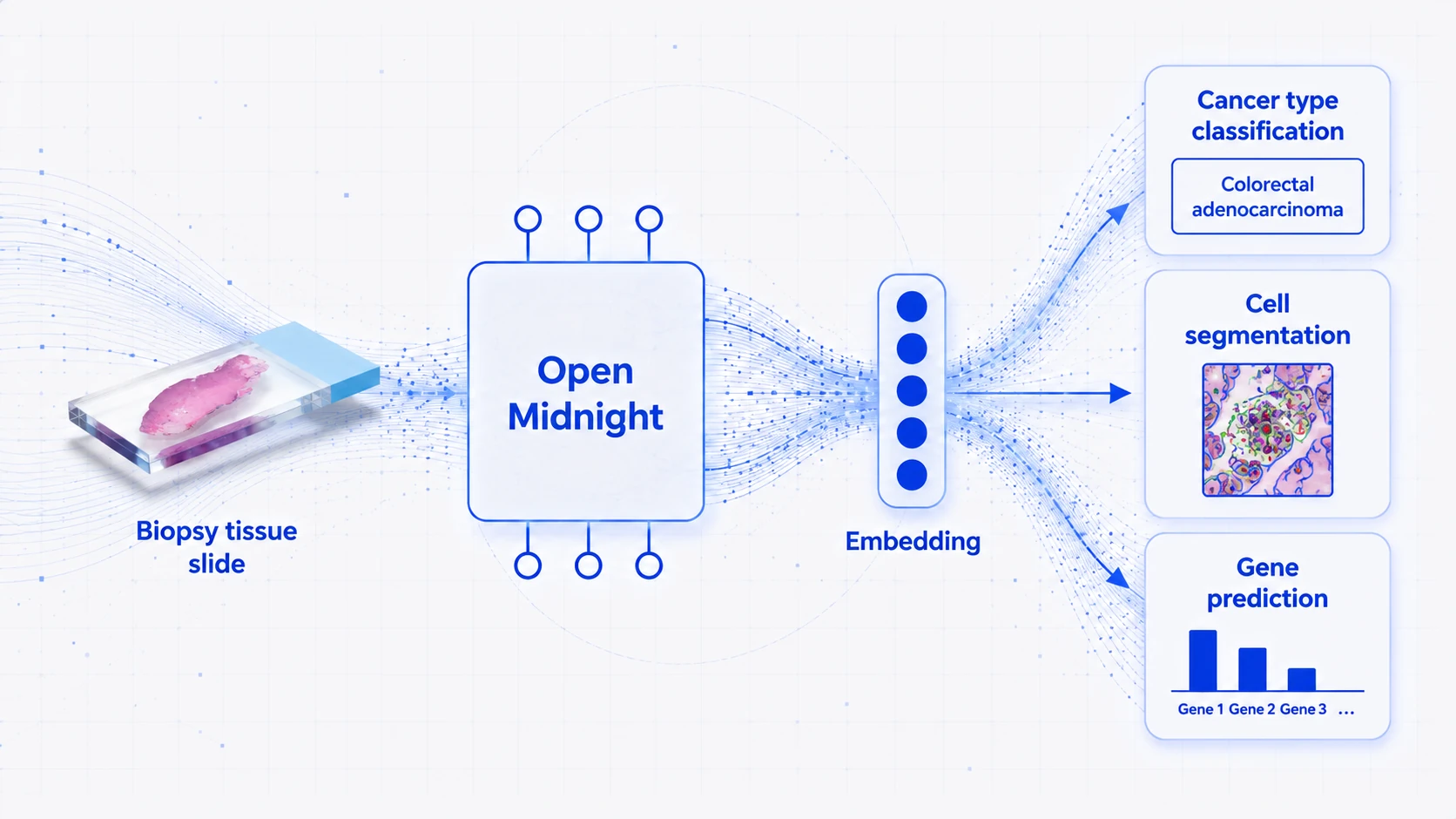
OpenMidnight reproduces and improves Kaiko's Midnight pathology foundation model while training on only 12,000 TCGA slides for roughly $1.6K of compute. The post argues that careful open pipelines can match or beat much larger pathology models, then releases the weights, code, and demo for the community.
Read ->
Sophont announces $9.22M in combined pre-seed and seed funding to build open multimodal foundation models across pathology, fMRI, clinical text, and other medical data. The post lays out the company strategy, MedARC relaunch, and why open science is central to both research quality and commercialization.
Read ->
Paul Scotti turns MedARC-style Discord research into an operating manual for online open science. The post covers simple codebases, strong project leads, transparent updates, self-onboarding, shared compute, and authorship systems that keep volunteer collaborations moving toward papers.
Read ->
Paul Scotti and Mihir Tripathy review the 2025 Algonauts winners and the shared recipe behind top brain-encoding systems for natural movies. The post highlights multimodal pretrained features, ensembling, and the surprising result that architectural complexity mattered less than representation quality and submission strategy.
Read ->
Tanishq Abraham and Paul Scotti argue that healthcare needs open, medical-specific, truly multimodal foundation models rather than narrow tools or general chatbots. The manifesto introduces Sophont as a research-and-translation company building that infrastructure for clinical care, life sciences, and future continuous-health systems.
Read ->